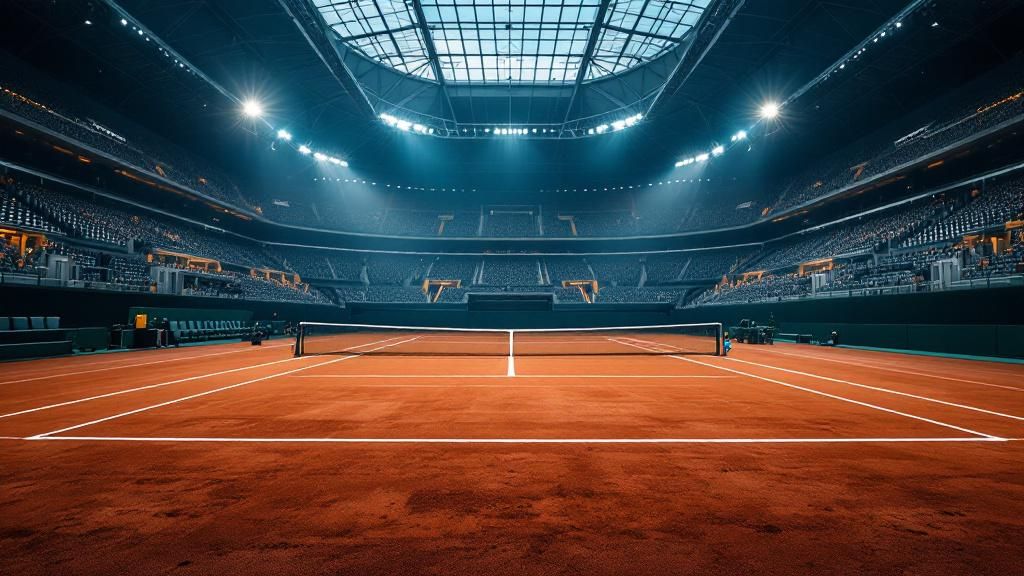
Real Madrid’s iconic Bernabeu stadium will accommodate a training court for the world’s leading tennis players in advance of the Madrid Open next month. The esteemed stadium will temporarily swap grass for clay between 23 and 26 April, providing top-ranked competitors including Spanish world number one Carlos Alcaraz an chance to perfect their preparations for one of professional tennis’s largest competitions outside the Grand Slams. The practice sessions, which will replicate the clay surfaces found at the tournament’s central venue, the Caja Magica, will not be open to the public. The Madrid Open, which spans 20 April through 3 May, incorporates both the ATP and WTA tours, making it one of the sport’s leading combined events.
A stadium adapted for tennis
The choice to use the Bernabeu constitutes an forward-thinking solution to a growing logistical challenge facing the Madrid Open. The tournament’s expansion to singles draws featuring 96 players contested across a two-week period, combined with the addition of doubles events, has stretched the capacity of the Caja Magica past its workable constraints. By gaining entry to one of global football’s most iconic stadiums, organisers have managed to accommodate the tournament’s ambitious growth whilst maintaining the standard of preparation facilities accessible to the world’s top players.
Tournament director Feliciano Lopez stressed that the move serves a genuine sporting purpose rather than just serving as a promotional initiative. “The goal is to have a dedicated practice surface which helps them – it’s not just a promotional venture,” the three-time Wimbledon quarter-finalist told BBC Sport. Lopez noted that following the announcement of the deal, he has received numerous enquiries from players and coaching teams wanting to access the facility. Real Madrid have no home fixtures scheduled during the week when their newly upgraded venue will be converted for tennis use.
- Practice sessions open to elite players during 23-26 April
- Court surfaces will accurately match the Caja Magica clay
- Public access to practice sessions is not allowed
- Tournament matches will continue exclusively at Caja Magica venue
Why Madrid Open required extra amenities
The Madrid Open has undergone a substantial transformation in the past few years, evolving from a conventional event into one of professional tennis’s most ambitious and cutting-edge events. The expansion to 96-player singles draws played across a fortnight, combined with the addition of extensive doubles tournaments, has generated significant strain on existing infrastructure. Tournament administrators found themselves facing a serious capacity issue at their traditional home, the Caja Magica, which could not accommodate the expanded draw whilst maintaining the rigorous standards required by the top-ranked players and their coaching personnel.
This expansion reflects the tournament’s growing prestige and market value within the competitive tennis schedule. As one of the most significant events outside the major championships, the Madrid Open attracts the sport’s top players and generates substantial global interest. However, this achievement produced a contradiction: the very acclaim that rendered the tournament so valuable also strained its infrastructure capacity. Tournament director Feliciano Lopez recognised that creative approaches were essential to maintain the event’s growth path and keep drawing world-class players from both ATP and WTA tours.
Moving past the initial location
The Caja Magica, located approximately five miles south of central Madrid, has functioned as the Madrid Open’s home for a considerable period. However, the venue’s constraints grew more evident as the tournament broadened its reach and ambition. The facility, whilst suitable for the tournament’s traditional format, found it difficult to offer sufficient practice courts and preparation areas for the substantially expanded player contingent now taking part in the event. This limitation threatened to compromise the calibre of training provided for competitors.
By gaining entry to the Bernabeu, organisers have efficiently resolved this logistical hurdle whilst concurrently producing substantial promotional benefits. The celebrated football venue’s adaptation as a tennis venue demonstrates innovative solution-finding at the highest organisational level. The setup enables the tournament to maintain its sporting credibility and athlete contentment whilst pursuing its aggressive development course, guaranteeing the tournament stays among elite tennis’s most prized and comprehensively supported competitions.
Real Madrid’s sporting ambitions expand
Real Madrid’s choice to establish a practice court at the Bernabeu represents a deliberate broadening of the club’s athletic interests past traditional football. The 15-time European Cup winners have demonstrated their commitment to adopting forward-looking alliances that enhance their celebrated ground’s worldwide reputation. By welcoming the world’s top tennis competitors to one of sport’s most celebrated grounds, Real Madrid has established itself as a forward-thinking organisation equipped to stage elite tournaments across various sports. This move aligns with the club’s broader vision of the Bernabeu as a versatile sports venue, following its recently completed renovation that transformed it into a modern, world-class stadium.
The plan carries minimal interference to Real Madrid’s fixture list, as the club has carefully scheduled the court construction to avoid key league matches. Should Real Madrid advance past the Champions League quarter-finals in their Bayern Munich tie, any subsequent matches with Liverpool or Paris St-Germain would be played away from home during the relevant period. This careful coordination ensures the club’s sporting priorities remain uncompromised whilst continuing to exploit the commercial and promotional opportunities offered through staging one of tennis’s leading events. The collaboration demonstrates how contemporary sports bodies can utilise their venues and established reputation to strengthen their position within the broader sports ecosystem.
| Feature | Details |
|---|---|
| Practice court dates | 23–26 April 2026 |
| Tournament dates | 20 April – 3 May 2026 |
| Court surface | Clay, matching Caja Magica specifications |
| Public access | Not open to spectators |
Tournament director Feliciano Lopez has been clear that this arrangement constitutes a genuine sporting initiative rather than a cosmetic commercial venture. The ex-world number 13 player has received considerable interest from players and coaching teams eager to use the Bernabeu’s training amenities during their Madrid Open preparations. Lopez’s vision prioritises practical benefit for participants, ensuring the partnership upholds the tournament’s competitive integrity and competitor welfare above all other considerations.
Marketing innovation meets real-world application
The Madrid Open has firmly positioned itself as a tournament willing to push boundaries and defy tradition within professional tennis. From unveiling an striking blue clay surface to using fashion models as ball kids, the tournament has consistently sought to attract global attention through creative initiatives. Director Feliciano Lopez has emphasised that the event takes pride in innovative approaches and embracing strategic risk-taking to provide fresh experiences for fans and players alike. This latest project at the Bernabeu represents the natural evolution of that approach, blending the legendary stadium’s worldwide recognition with authentic competitive benefits.
Beneath the prestigious surface of hosting matches at one of global tennis’s most renowned venues lies a practical necessity driving the decision. The Madrid Open’s expansion to 96-competitor singles draws contested over a fortnight, alongside comprehensive doubles competitions, has quickly exceeded the Caja Magica’s capacity. By leveraging the Bernabeu’s spacious facilities for competitor training, organisers address genuine logistical constraints whilst simultaneously generating substantial marketing value. This dual approach ensures the partnership delivers tangible advantages to competitors rather than functioning purely as a marketing spectacle divorced from sporting reality.
- Blue clay surface added to enhance visual appeal and television presentation
- Fashion models assigned as ball kids during recent tournament editions
- Virtual tournament held during 2020 coronavirus pandemic via gaming consoles
- Tournament expansion demands extra courts beyond Caja Magica capacity
- Practice court installation addresses player preparation needs authentically
Anticipating tennis at the Bernabeu
Whilst the existing arrangement is limited to practice facilities, the triumph of this inaugural partnership could potentially reshape how the Madrid Open functions in the years ahead. Tournament director Lopez has been careful to temper expectations, noting that hosting tournament matches at the Bernabeu stays outside the organisation’s short-term plans. However, the example established by other significant tournaments cannot be wholly discounted. The Miami Open’s addition of a showcase court within the Hard Rock Stadium demonstrates that such arrangements are possible at premier sporting venues, should circumstances and operational factors work out positively in future editions.
For now, the priority remains firmly on offering measurable advantages to the global top athletes during the critical preparatory period before the main tournament commences at the Caja Magica. The availability of a world-class practice venue at one of international sport’s most recognisable stadiums provides an unique prospect for players to refine their clay-surface techniques. Whether this turns out to be a one-off spectacle or the basis for a longer-term arrangement will in the end depend on how effectively the programme meets player needs whilst preserving the event’s standing for innovation and excellence.
